
Key takeaways
-
01
Every dress code changes the same three things: the jacket, the tie and the shoes.
-
02
“Lounge suit” on an invitation means a dark suit and a tie, not a tuxedo, and not linen.
-
03
After five is cocktail: the jacket stays on, but it’s the place for colour and texture.
-
04
Black tie optional still prefers a dinner jacket. If you wear a suit, make it navy or charcoal.
-
05
When the wording is vague, dress one rung up.
Men's dress codes all sit on one ladder. At the top is white tie; at the bottom, neat casual. Each step down changes three things: the jacket, the tie and the shoes.
Find the code on your invitation in the table below, then read its section for what to wear and the one mistake to avoid.
These are the codes our tailors dress clients for, from black tie galas to the office. In the video below, we walk through four of them: smart casual, business attire, cocktail and black tie.
The Men's Dress Code Ladder
There are nine men's dress codes, from most to least formal, with formal and lounge suit sharing one rung. There's no official rulebook, but the order holds: white tie, black tie, formal and lounge suit, business formal, cocktail, semi-formal, business casual, smart casual and neat casual. Each row shows the jacket, tie and shoes that code asks for.
| Dress code | Jacket | Tie | Shoes |
|---|---|---|---|
| White tie | Black tailcoat | White bow tie | Black patent |
| Black tie | Dinner jacket | Black bow tie | Black patent or highly polished |
| Formal and lounge suit | Dark matching suit | Tie | Black or dark brown Oxfords |
| Business formal | Matching suit in navy, charcoal or grey | Tie | Oxfords or Derbies |
| Cocktail (after five) | Suit, or a sharp jacket and tailored trousers; room for colour and texture | Usually; open collar at some events | Polished leather |
| Semi-formal | Suit, or a jacket and trousers | Optional | Leather |
| Business casual | Sports jacket or blazer, optional | No | Leather, or loafers |
| Smart casual | Optional | No | Loafers, clean leather sneakers |
| Neat casual | No | No | Clean closed shoes |
White Tie
White tie is the most formal dress code there is, a step above black tie and far rarer. Black tie began as the less formal alternative to white tie, which is why every white tie piece sits a notch higher.
The white tie dress code asks for a black tailcoat cut away at the front, matching trousers, a white wing-collar shirt, a white waistcoat, a white bow tie and black patent shoes.
In Australia, white tie is kept for a handful of balls and official occasions. The mistake is treating it as black tie: a dinner jacket or a black bow tie is underdressed at a white tie event, and a long tie is never part of it.
Black Tie
Black tie means a dinner jacket, also called a tuxedo, not a dark suit. The pieces are a black or midnight blue dinner jacket with satin lapels, matching trousers, a white dress shirt, a black bow tie, and black patent or highly polished shoes. As we put it:
“[Black tie] is one of the only occasions where a tuxedo isn’t just recommended, it’s expected.”
Black tie optional still prefers the dinner jacket. If you wear a suit instead, make it navy or charcoal; navy's a better choice than black. Creative black tie keeps the structure but loosens the detail, such as a velvet jacket or a coloured bow tie.
The one mistake is a black business suit in place of a dinner jacket, because without satin lapels it reads as a missing tuxedo. Our guide to the black tie dress code covers every piece, and every tuxedo we make starts from your measurements.

Formal and Lounge Suit
A lounge suit dress code asks for a matching suit in a dark colour, worn with a shirt and tie. It's the suit you'd wear to the office, at its smartest.
Despite the name, a lounge suit isn't a light linen or relaxed suit. It's the standard suit and tie, and it sits just below black tie on the ladder.
On an Australian invitation, "lounge suit" and "formal" ask for the same thing: a suit and tie, not a tuxedo. Lounge suit is the older, British-born wording for the same rung, and our guide to formal wedding attire covers it at weddings.
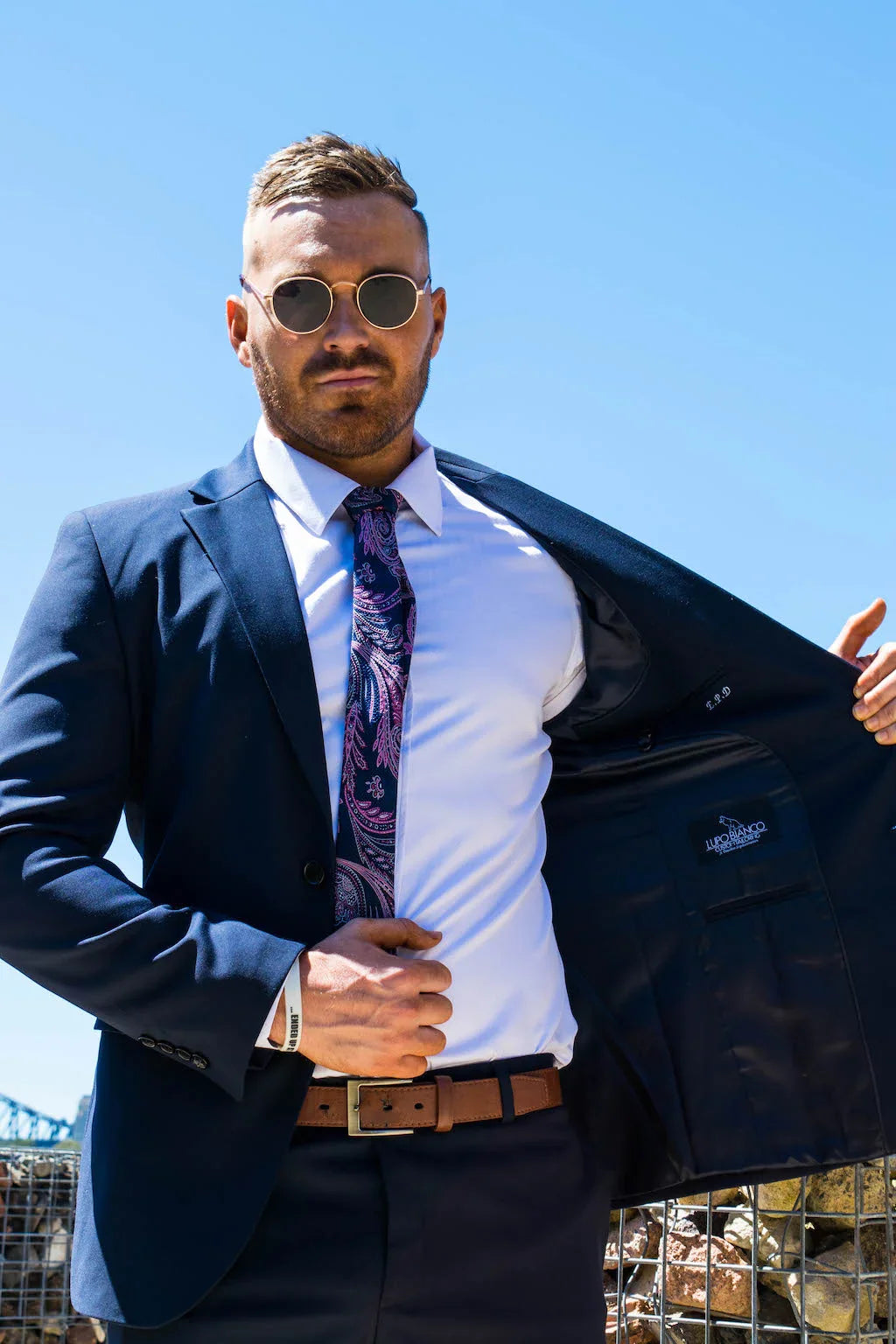
For men, a lounge suit dress code means a navy or charcoal suit, a white or pale blue shirt, a tie, and black or dark brown Oxfords. Keep the pattern quiet and the shirt crisp, because the smartness of the whole outfit is what the code is asking for.
The two mistakes go in opposite directions. A tuxedo is overdressed unless the invitation says black tie, and leaving the tie at home is underdressed. Our formal suits are cut for exactly this rung.

Business Formal
Business formal is the workplace version of a suit and tie, worn for client meetings, job interviews, boardrooms and court. Offices and invitations also call it "business attire", and it's the same code. Here's how we sum it up:
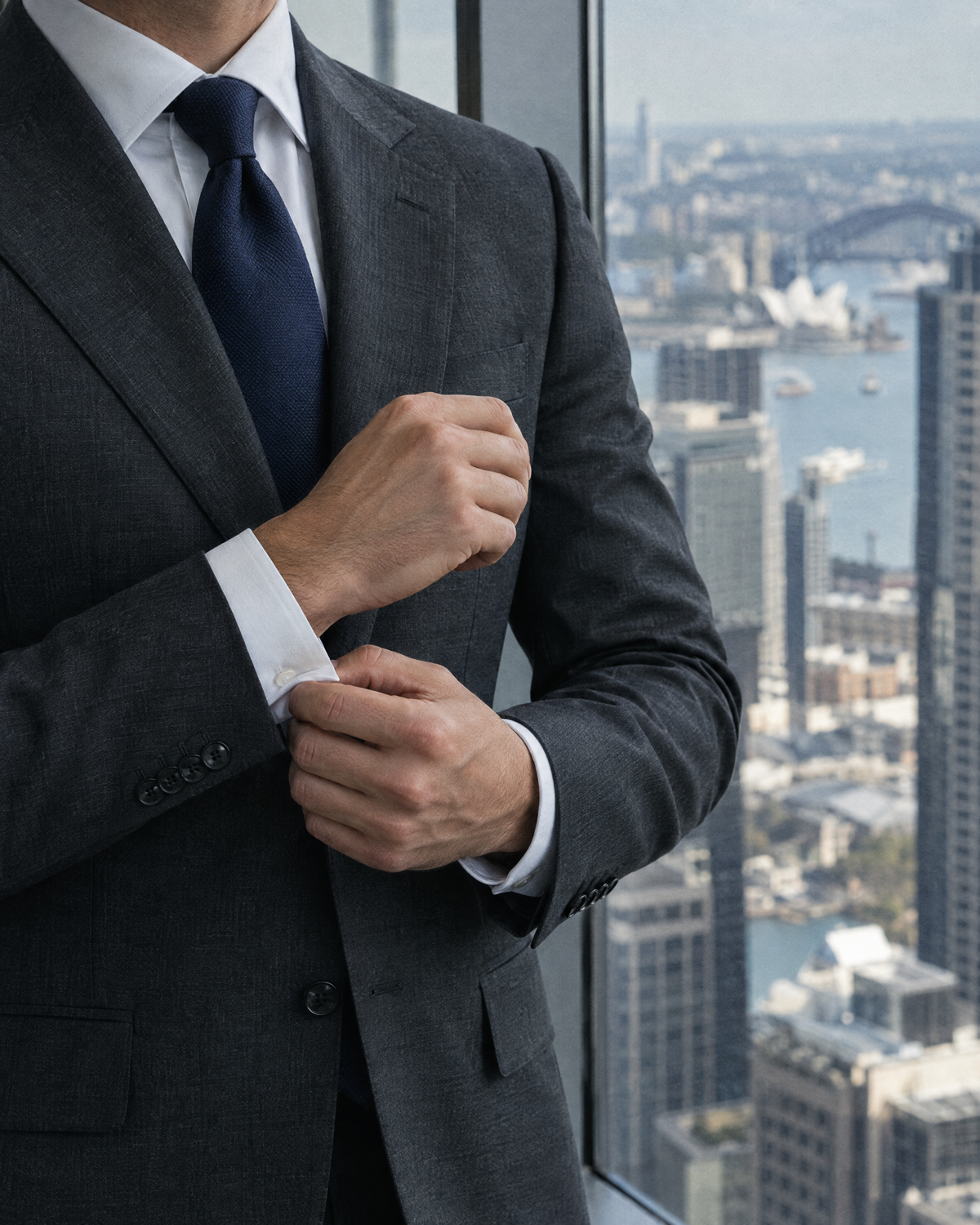
“Business attire is your classic professional look. We’d recommend a well-fitted suit, usually in charcoal grey or navy, paired with a clean dress shirt, leather shoes, and in most cases, a tie.”
In practice, that means a white or pale blue business shirt, a conservative tie, and Oxfords or Derbies. Skip black: a black suit reads as evening wear, or as a stand-in for a tuxedo, so navy, charcoal and grey do the job better.
The mistake is a loud pattern or a missing tie, either of which pulls the outfit down to business casual. Our business suits are made for this standard.

Cocktail and After Five
Cocktail is an evening dress code, a step below formal and a step above semi-formal. "After five" is the Australian invitation wording for the same code, dating from when men changed out of their office clothes for the evening. In the video, we explain why it's the most flexible of the evening codes:
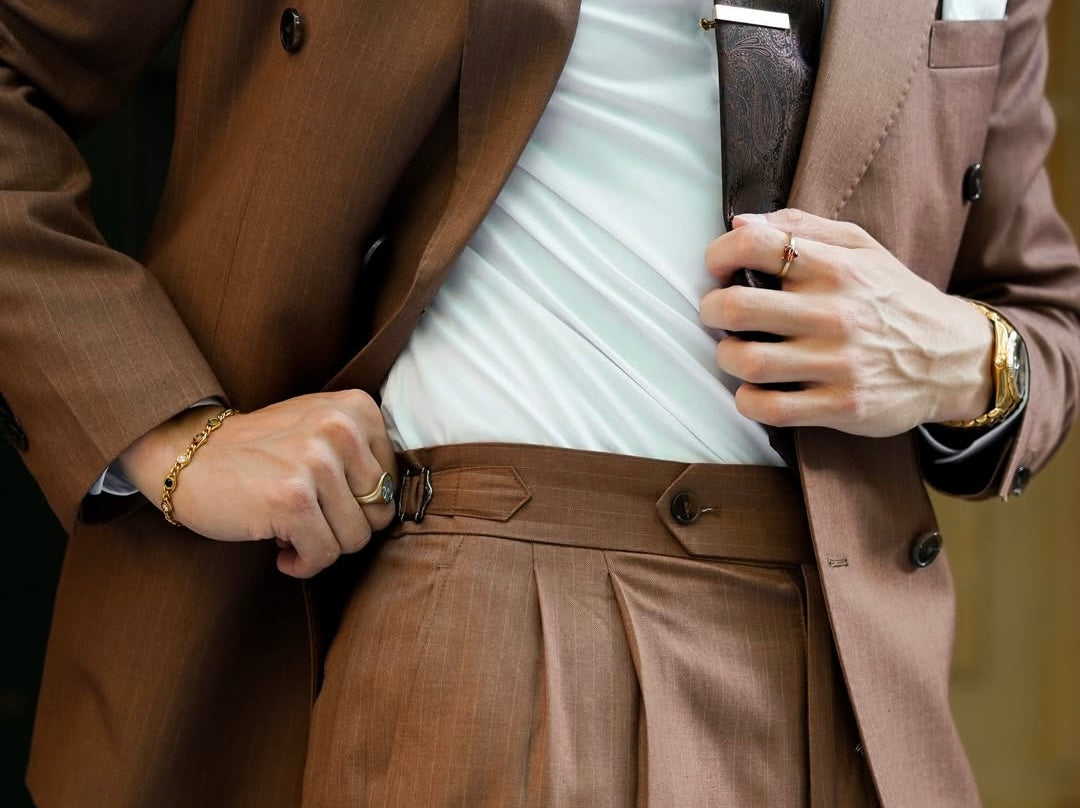
“Cocktail attire is one of the most versatile dress codes. This is where you can start introducing different colours, textures, or subtle patterns while still keeping the look refined. Depending on the event, you can even go open collar instead of wearing a tie.”
A suit is the safe default, and a sharp jacket with tailored trousers works at many cocktail events. There's room for a richer colour, a textured cloth or a subtle pattern; wear a tie for most events, go open collar where the event allows, and finish with polished leather shoes.
Many invitations and guides use cocktail and semi-formal interchangeably. We place cocktail a notch above because it's an evening code where the jacket stays on and darker, richer colours lead, while semi-formal is more relaxed, with lighter, daytime colours.
The mistake is going so relaxed that the outfit reads as smart casual: no jacket, jeans or sneakers.
Semi-Formal
Semi-formal sits a step below cocktail and a clear step above smart casual. It gives you more room than cocktail: lighter, daytime colours work, and the tie is optional.
Wear a suit in a lighter colour, or a blazer with tailored trousers, with a collared shirt and leather shoes. A garden party invitation asks for much the same thing, in a lighter cloth.
The mistake is dressing down into smart casual by leaving the jacket at home. Our guide to semi-formal wedding attire covers outfits for indoor, garden and creative settings.

Business Casual
Business casual is the everyday office standard in many Australian workplaces: no tie, and the jacket is optional. It's still dressed for work, which is what separates it from smart casual, the code for going out.
Wear a sports jacket or blazer, a collared shirt, tailored trousers or chinos, and leather shoes or loafers.
The line business casual doesn't cross: no T-shirts, sneakers or jeans, unless your workplace says otherwise. In a new job, wear the jacket for the first week, then take your cue from the office.

Smart Casual
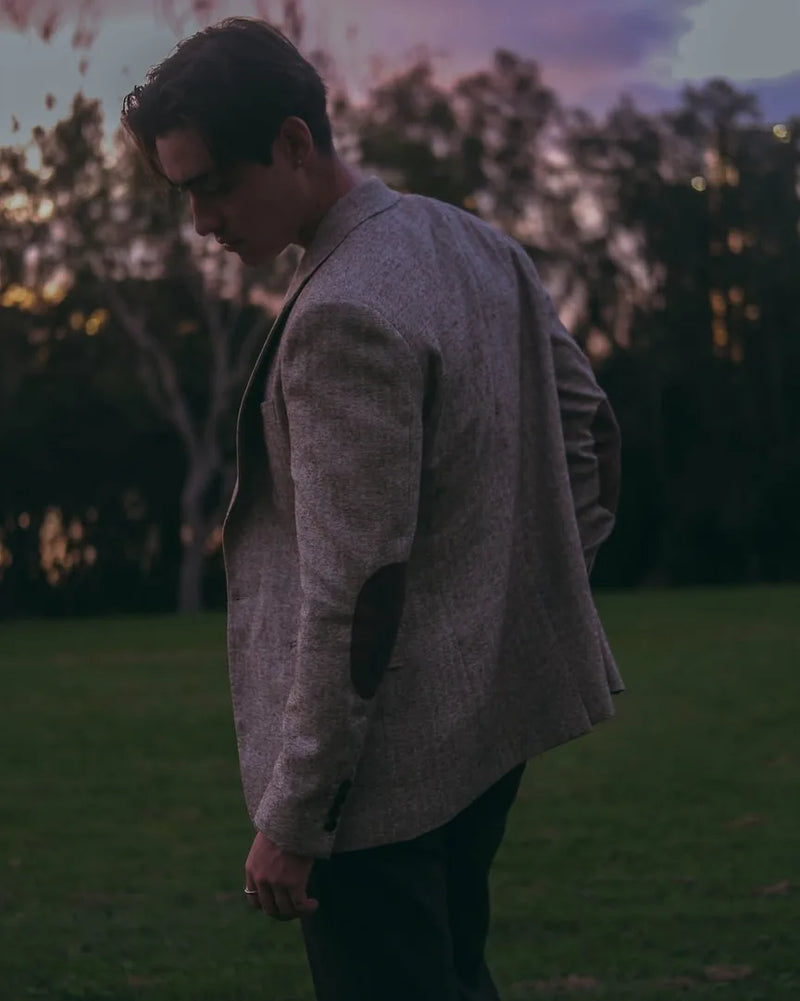
A smart dress code for men, written on most invitations as smart casual, means relaxed but put together: a jacket is welcome but not required, and a tie isn't expected. Here's where we'd start:
“Smart casual is about looking relaxed while still looking polished. We usually recommend a sports jacket with tailored trousers, a quality shirt, and a pair of loafers.”
At the relaxed end, chinos or dark jeans, a collared shirt, a polo or a fine knit, and clean leather sneakers all fit the code.
The mistake is a full business suit, which reads as overdressed in a relaxed setting. Our casual tailoring is made for this rung.
Neat Casual
The neat casual dress code is a venue rule more than an invitation code, used by clubs, RSLs, pubs and casinos to ask for clean, tidy casual clothing. There's no single standard: venues set their own, so it's worth checking theirs before you go.
A collared shirt or polo, jeans or chinos, and closed shoes pass at most venues. Thongs, singlets, sportswear and ripped clothing don't.

How to Read an Invitation
When the wording on an invitation is vague, dress one rung up, not down. Taking off a tie is easier than finding one at the venue.
The venue and the time narrow it down. An evening event at a city venue sits higher on the ladder than a daytime ceremony outdoors, even under the same wording.
In an Australian summer, the dress code doesn't drop in the heat; the cloth does. Choose a lighter, breathable cloth and keep the jacket, rather than losing the jacket altogether.
Two phrases come up on invitations. "Suit and tie" is the formal and lounge suit rung. "Jacket required" sets a floor rather than a code: wear a jacket, with the tie optional, which puts it between semi-formal and smart casual.
Shoes follow the same ladder, from patent at the top to clean leather sneakers near the bottom, and our guide to dress shoes matches each style to its code.
If the code is genuinely unclear, ask the host. It's a normal question, and a better answer than a guess. For two common occasions, see what to wear to the races and our wedding guest outfit guide.
Dress for the Occasion with Lupo Bianco
At Lupo Bianco, we make suits and tuxedos for the rung you need, from black tie to the office. Every one starts with a custom pattern taken from at least 18 measurements, and standard delivery is about four to six weeks, with express available on request.
If you're not sure what your invitation is asking for, come in and talk it through with one of our tailors, and we'll match the outfit to the occasion. Book a consultation to get started.

Made to measure
Explore our suiting
Suits and tuxedos made for every rung, from the office to black tie.
Explore our suiting