
Key takeaways
-
01
Break up the suit and lose the tie. That’s the line between business formal and business casual.
-
02
A jacket is optional, but it’s the fastest way to look right in a meeting.
-
03
Dark jeans pass in many offices. When in doubt, wear chinos.
-
04
Keep the jacket and trousers clearly different shades, and only one piece patterned.
-
05
A T-shirt under a blazer is smart casual, not business casual.
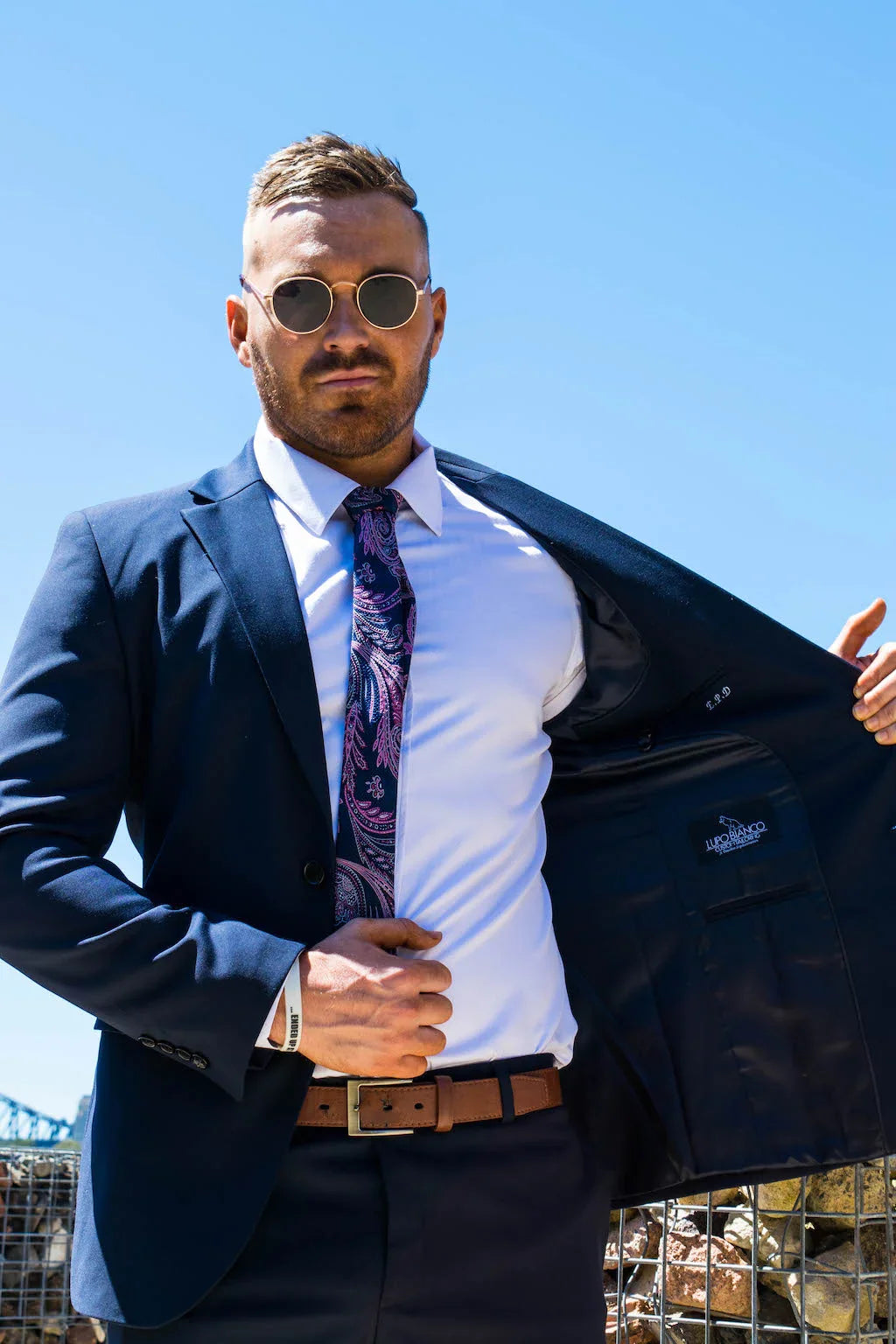
The business casual dress code for men means tailored clothes without the full suit and tie: a collared shirt, chinos or tailored trousers, leather shoes, and a jacket when the day calls for one. It's the everyday standard in a lot of Australian offices, and it's easier to get right than it looks.
The aim is to look as sharp as your manager without looking stiffer than everyone else.
The skill it asks for is pairing separates so they look chosen rather than left over. Further down, Bishoy Magdy, a tailor at Lupo Bianco, shows how a small change takes tailoring out of full-suit territory.
What Business Casual Means
What is business casual for men? It's the work dress code that sits between a full suit and weekend clothes: a collared shirt, tailored trousers or chinos and leather shoes, with the jacket optional. For men in Australia, it's the standard in many offices, at client lunches and at work events.
On the ladder of men's dress codes, business casual sits below semi-formal and above smart casual, a social code that lets a T-shirt, jeans and sneakers through. Among the work codes, it's the step below business formal, which asks for a matched suit and a tie.
What defines it is a broken-up suit. The jacket and trousers don't need to match, and the tie comes off.
The floor is anything that reads as weekend or gym clothing: a T-shirt on its own, hoodies and sportswear, polos with large logos, ripped or faded jeans, running shoes, thongs and slides, and in most offices, shorts.
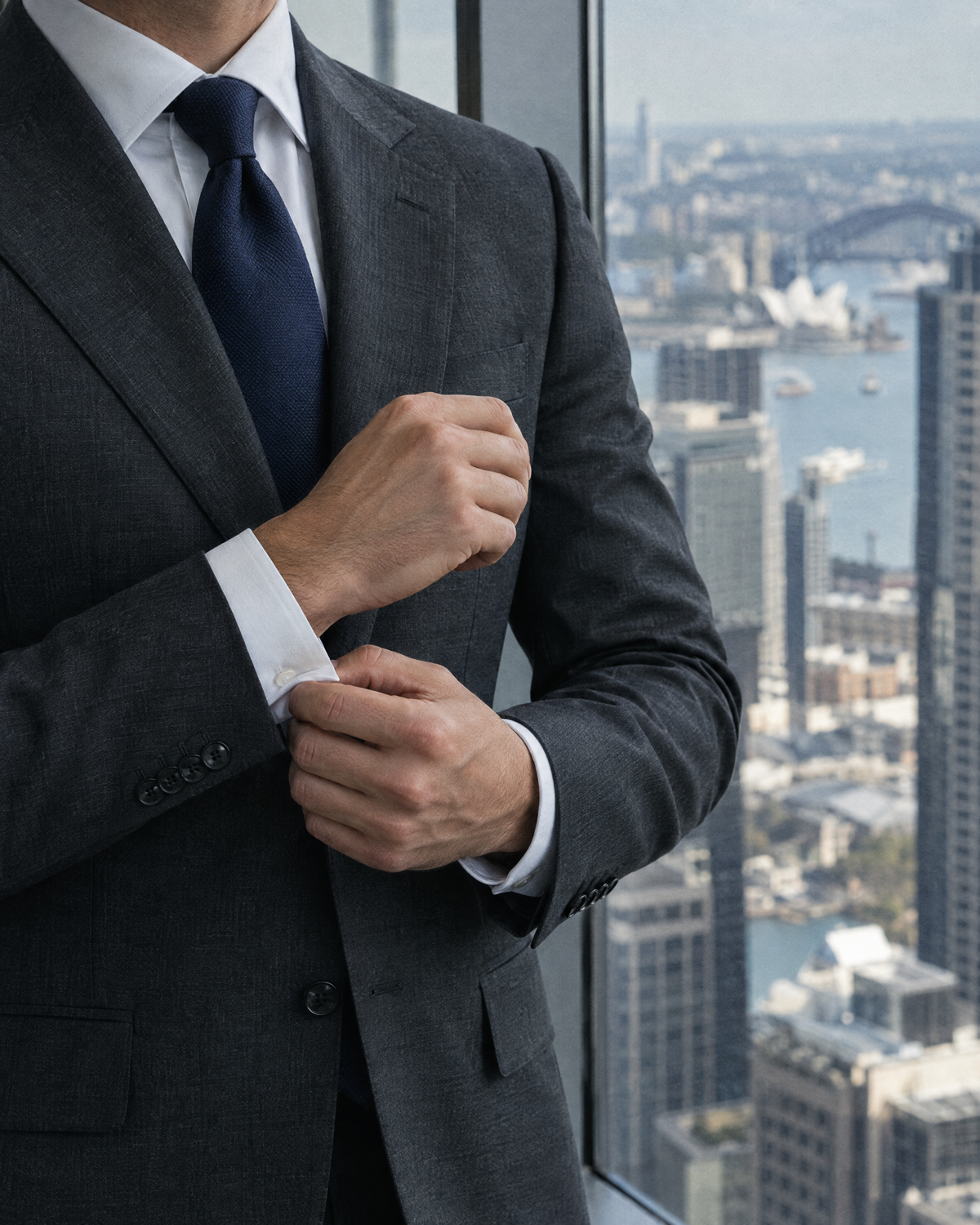
There's barely a ceiling. A suit is never out of place in a business casual office: take the tie off and it fits right in, and our business suits work with a tie for client days and without one for the rest of the week.
The name isn't always a reliable guide. Some workplaces say "business attire" and mean business casual, while others mean a suit and tie, so if the wording's unclear, ask.
Business casual also covers a range. A sports jacket and tailored trousers sit at the smart end, a polo and chinos at the relaxed end, and every office settles somewhere in between.
What to Wear for Business Casual
In the video below, Bishoy shows how to wear tailoring without the full suit.
The Jacket
A jacket is optional for business casual, but it's the quickest way to look right in a meeting, and it's the piece that moves an outfit from the relaxed end of the range to the smart end.
Choose a sports jacket or blazer in navy, grey, brown or a muted green, in a cloth with some texture: hopsack, a wool-cotton blend or a subtle check. The texture is what tells people it was made to be worn on its own.
Leave your business suit jacket out of it. Smooth cloth cut to match a pair of trousers looks orphaned next to chinos.

Shirts, Polos and Knits
A long-sleeved collared shirt, worn open at the neck, is the business casual default. An Oxford shirt or a button-down collar suits it better than a stiff spread collar, which tends to look like it's waiting for a tie.
In relaxed offices, a polo works too, in a smooth knit with no large logo, tucked in. A fine merino crew or half-zip over a shirt can stand in for the jacket.
T-shirts aren't business casual by default, and under a jacket they belong to smart casual. Our business shirts are cut from your measurements, which shows most when there's no jacket over them.
Trousers
Odd trousers are the swap that makes an outfit business casual. Wear chinos, or tailored trousers in cotton, wool or a wool blend, in place of the trousers from a suit.
Navy, grey, stone, olive and tan cover most outfits, in a different shade from your jacket. Go slim but not tight, finishing on the shoe with little or no break.
Cargo pants, trackpants and anything faded don't pass. Our chinos and tailored trousers are made to your measurements, so the length and the fit through the seat are yours from the start.
Are Jeans Business Casual?
Are jeans business casual? In many offices, yes, as long as they're dark, clean and well cut, though some workplaces don't allow denim at all.
The jeans that pass are dark indigo or black, without rips or fading. Wear them with a collared shirt and leather shoes, so the rest of the outfit still looks dressed for work.
If you don't know where your office stands, chinos are the safe choice. On a day with a client meeting, swap back to tailored trousers even where jeans are allowed.
Shoes
Clean, minimal leather sneakers pass for business casual in relaxed offices, but running shoes don't pass anywhere. The shoes that work in every business casual office are loafers, Derbies and brogues.
In cooler months, desert boots and Chelsea boots work too. Brown and tan suit most business casual outfits, and black works best with darker trousers such as charcoal.
Leather soles and a slim profile read smarter, while chunky rubber soles pull a shoe towards the weekend. For how each style differs, see our guide to dress shoes.

The business casual default
Milano Leather Penny Loafers
A leather penny loafer works with chinos, tailored trousers or dark jeans.
Buy now · $250
With more detail
Firenze Oxford Brogues
Brogueing relaxes an Oxford enough for an office without a tie.
Buy now · $300The Tie
You don't need a tie for business casual. For a big meeting, a knitted tie or a textured one with a jacket works well, and a corporate office that expects a tie every day will say so. Leave the shiny silk ones for business formal.
How to Pair Separates for Business Casual
Business casual is separates that look chosen, not left over, and it doesn't take much to get there from a suit. As Bishoy puts it:
“Sometimes [making a suit less formal] is as simple as changing one element, the colour, the cut, and it completely changes the look.”
Contrast does most of the work. Pair a navy jacket with grey trousers, or a brown or olive jacket with navy or stone, keeping the two clearly different shades. Navy on almost-navy just looks like a mismatched suit.
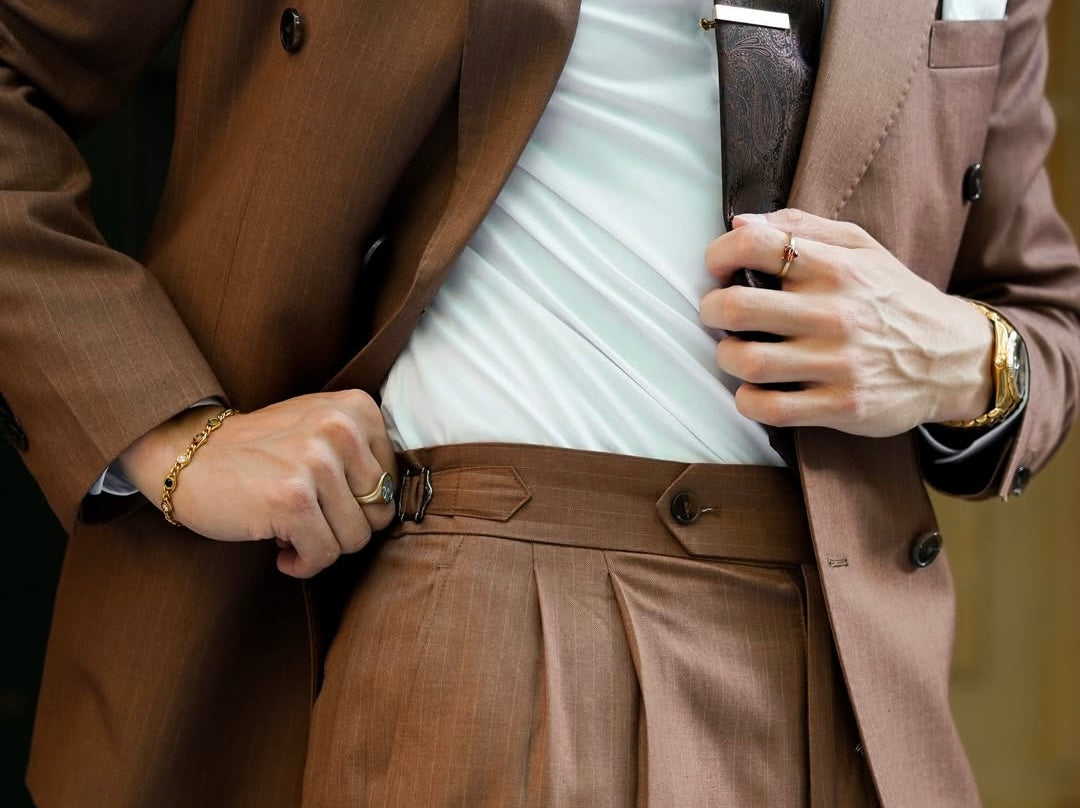
Texture is the other tool Bishoy reaches for. Put a textured jacket over smooth trousers, or the reverse, and keep to one patterned piece at a time, so a check jacket goes with plain trousers. Our guide to suit patterns explains each one.
Smart Casual vs Business Casual
Business casual vs smart casual comes down to where you're going: one is a work code, the other a social one. Business casual keeps a collared shirt, tailored trousers or chinos and leather shoes, while smart casual allows a T-shirt under a jacket, jeans and clean sneakers as standard.
That makes business casual the code for the office, client lunches and work events, and smart casual the one for dinners, parties and relaxed weddings.
In relaxed offices, the two blur. A business casual outfit always passes at a smart casual event, but a T-shirt and sneakers won't always pass at work.
At work, the step up is business formal, which puts the matching suit and tie back on.
Business Casual in an Australian Summer
Summer business casual for men keeps the structure and lightens the cloth. Choose cotton and linen-blend shirts and trousers, and an unlined jacket, or none on the hottest days.
This is where a good polo earns its place. It's cooler than a shirt and still has a collar, so it holds up in any office relaxed enough to allow one.
Shorts are too casual for most offices. Wear tailored shorts only where your workplace clearly allows them, and never to a client meeting.
Suede loafers with no-show socks finish the summer version.
Business Casual Tailoring Made for You
We make trousers, shirts and jackets to fit, so your separates look intended rather than thrown together. Each piece is cut from a custom pattern built on at least 18 of your measurements, and standard delivery takes about four to six weeks. Express is available on request.
Tell us what your office wears, and we'll help you build a set of pieces that work together day to day. Book a consultation and we'll start with your measurements.

Made to measure
Explore our tailored trousers
Tailored trousers cut from your measurements, to wear with any jacket.
Explore our tailored trousers