Key takeaways
-
01
Three things change a collar: how far the points spread, how long they are, and how stiff the collar is. Every named style is a combination of those three.
-
02
A semi-spread is the most versatile collar for most men. It carries a tie and holds its shape without one.
-
03
The wider the collar spread, the wider the tie knot it needs. A four-in-hand stranded in a cutaway is the most common mismatch.
-
04
If you wear your shirt open, structure matters more, not less. An unlined cutaway collapses the moment the tie comes off.
-
05
Collars bubble and ripple because of how the interlining was fused, and once it goes it cannot be repaired.
A dress shirt has one detail that sits directly under your face, never comes off and never gets covered, and most men have never chosen it deliberately. If you have been asked which collar you want and had no answer, or you own two shirts that clearly differ without being able to say how, the collar is what you are looking at. There are thirteen shirt collar types worth knowing, and they are easier to tell apart than they look.
The collar does more visual work than the fabric, the fit through the body or anything else on the garment, because it is the one part that stays visible under a jacket, from every angle, for a full day. Get the collar wrong, and the shirt reads wrong, whatever else is right.
Below are all thirteen types of shirt collars: what each one looks like, what it signals and when to wear it. These are the dress shirt collar types we specify in a fitting, in the order we present them, rather than a list assembled from other guides. Our senior tailor, Scott Grant, walks through each one in the video below, and he weighs in on a few of them along the way.
The Three Things That Change a Collar
Every collar name in this guide is a combination of three variables. Learn the three, and the names stop being something to memorise.
Spread is the angle between the collar points, or how far apart they sit when the shirt is buttoned. Spread decides how much of the tie knot and the shirt front you see.
Point length is how long the collar points are, measured from the band to the tip. Length decides how formal and how traditional the collar reads.
Structure covers how stiff the collar is and how tall it stands. Collar height matters as much as stiffness, and together they decide whether the collar holds its shape when you wear it open.
These are the three things we ask about in a fitting, in that order, because they settle the question faster than putting thirteen samples in front of someone. Once you can see all three, every name below becomes a combination you can picture rather than a term to remember.
The 13 Shirt Collar Types
The thirteen collar types are grouped by where they belong rather than listed alphabetically, so a reader dressing for the office can stay in the first group and a reader dressing for black tie can go straight to the second. No collar here is better than another; they are answers to different questions. Apply the three variables as you read, and each entry lands as a shape you can picture.
Everyday collars: Classic · Semi-spread · Point · Button-down · Hidden button-down
Formal and dress collars: Widespread · Cutaway · Tab · Pin · Wing tip
Distinctive and casual collars: Club · Mandarin · One-piece

Everyday Collars
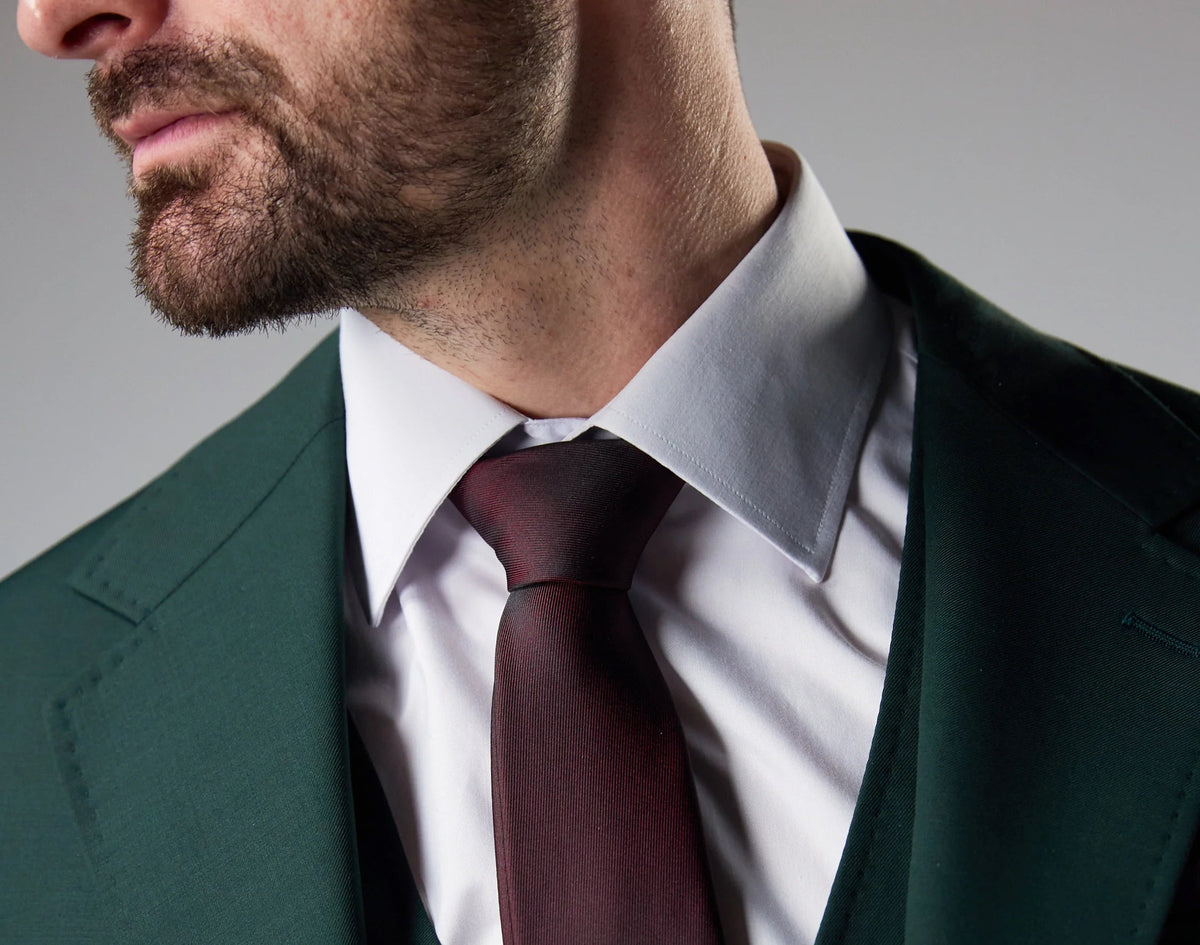
Classic. Moderate spread, moderate point length, and enough structure to sit flat. It takes every tie knot and works under every jacket. If you own one collar, this is the one that never looks like a decision.
A note on naming: many guides treat "classic" and "point" as the same collar. We keep them separate, because the difference is visible once you see the two together. Classic is the balanced middle; point is narrower with longer points.
Semi-spread. Slightly wider than classic, with a moderate point. This is the collar we recommend most often, because it carries a tie without looking dressed up and holds its shape when the tie comes off. It is the most versatile collar on this list.
Point. A narrow spread with longer points, which draws the eye down the body rather than out across it. It reads conservative and traditional, and it suits a narrow tie and a small knot. On a broad face or a short neck, it can look severe.
“Some people don’t like to see the buttons poking through the points of the collar.”
So you get the collar that stays put, without the hardware on show.
Formal and Dress Collars
Widespread. A wide spread with a shorter point, which opens the space at the throat so more of the knot and shirt front shows. It needs a substantial knot to fill that space, so it wants a half or full Windsor and a tie with some body behind it.
Cutaway. The spread taken further, with the points angled so far back that they run almost parallel to the collar band. It demands the widest knot you can tie and looks wrong with anything narrow. Worn properly, with a full Windsor and a collar that holds its shape, it is the most deliberate collar here.
Tab. A short fabric tab sits behind the knot and joins the two points together. The tab lifts the knot and pushes it forward, so the tie stands proud of the shirt instead of lying flat against it.
Pin. The same idea in metal. A bar or pin passes through an eyelet in each point and under the knot, doing the same lifting job while adding a visible piece of hardware. Both the tab and the pin solve a problem most men do not know they have, which is a knot that sits flat and slowly slides down. Neither works without a tie.
Wing tip. A short, stiff collar that stands up, with two small points folded forward at the front. It belongs with a bow tie and black tie or white tie, and nowhere else. With a business suit it reads as costume.
Distinctive and Casual Collars
Club. A classic collar with the points rounded off instead of cut square. It carries an English school association and an unmistakable vintage note, which makes it a deliberate choice rather than a default. Pair it with a small knot and a soft jacket.
Mandarin. A short band that stands up with no points at all. It takes no tie, reads modern and sits at the smart-casual end of a business wardrobe. Clean under a jacket, and impossible with a tie.
One-piece. A collar cut as one continuous piece with the shirt front, with no separate collar band underneath it. That construction makes it stiffer than a standard collar and it sits more flared open, which is the whole point of it. It takes no tie and no bow tie. An optional single button can hold the flare down if you want it closer to the neck. This is the collar we specify for men who rarely wear a tie and want an open neck to look intentional rather than undone. Ask Scott what to wear it with, and the answer is a sports jacket:
“A one-piece is very beautiful and goes exceptionally well with sports jackets.”
Which Collar to Wear Without a Tie
Most men wear a business shirt open-necked most of the time, and that is exactly when the collar choice matters most. With a tie, the knot fills the gap and holds the points in position. Without one, nothing does. The collar is working alone, and its structure and spread decide whether it still looks intentional at four in the afternoon.
A structured semi-spread holds its shape. So does a one-piece, which is built for it, and a button-down, which is held down by design. A soft unlined cutaway or widespread does the opposite: with no knot in the gap, the points have nothing to sit against, so they gape and curl away from the chest.
There is a test you can run on shirts you already own. Button the top button, stand in front of a mirror and look at whether the points lie flat against the shirt or lift away from it. Most men have at least one shirt that fails, and it is almost always a shirt bought for a wedding and worn open ever since.
Matching the Collar to Your Tie Knot
The rule is simple: the knot should fill the space between the points without crowding them. A wider spread needs a wider knot, and a narrow spread needs a narrow one.
In practice, the pairings are clean. A four-in-hand, the narrow asymmetric knot most men already tie, belongs with a point or classic collar. A half Windsor suits a semi-spread. A full Windsor is what a widespread or a cutaway was designed around.
Both failure modes are easy to spot once you know them. A four-in-hand in a cutaway leaves a wedge of bare shirt on either side of the knot, which is the mismatch we see most. A full Windsor forced into a narrow point collar pushes the points apart and buckles them at the base.
One thing catches men out here. The tie changes the knot as much as the choice of knot does, because a thick wool tied in a four-in-hand can finish wider than a fine silk tied in a half Windsor. Tie the knot you plan to wear before you decide the collar is wrong.
Matching the Collar to Your Face and Build
Collars work by contrast, so the principle is balance rather than matching. A wider spread adds width at the jaw and balances a longer, narrower face. A narrower collar with longer points draws the eye downward and balances a rounder or broader one.
Height works the same way. A taller collar suits a longer neck and looks proportionate on one, while it crowds a shorter neck and shortens it further. A short collar does the reverse.
Treat all of that as a guideline rather than a rule. In the fitting room, how the collar is made and how well it fits your neck matter more than the shape of your face, and a well-made collar in the wrong spread still looks better than a poorly made one in the right spread.
Collar Structure: Stays, Interlining and Why Collars Collapse
Interlining is the layer of material between the outer collar fabric and its lining, and it is what gives a collar stiffness and shape. It is also the single biggest difference between a collar that still stands up after five years and one that ripples after a dozen washes.
Most shirts use fused interlining, which is bonded to the collar fabric with heat and adhesive. When that bond fails, the layers separate and the collar bubbles and puckers across the points. It cannot be pressed out and it cannot be repaired, which finishes the shirt rather than just the collar.
Collar stays are the thin strips that sit in a channel under each point. Removable stays are better than sewn-in ones, because you take them out before washing and pressing and can replace them with something stiffer. Sewn-in stays warp along with the collar and cannot be swapped.
This is the clearest practical case for made-to-measure business shirts over buying off the rack, and it is a construction fact rather than a sales point. You can specify the interlining and the stays, and there is no way to inspect either one in a shop.
Shirt Cuffs, and How They Pair With Collars
Shirt cuffs follow the same logic as collars, and there are three types of shirt cuffs worth knowing.
The barrel cuff, or button cuff, is the everyday default. It closes with one or two buttons and works with everything from an open collar to a business suit.
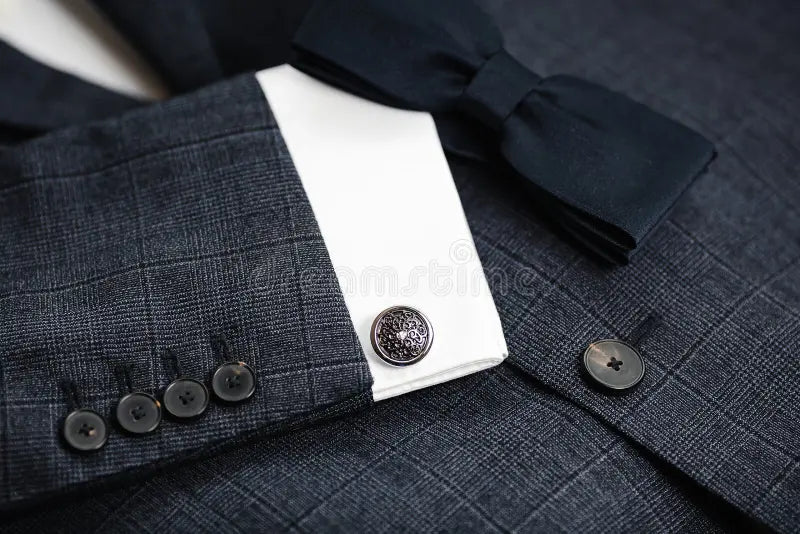
The double cuff, better known as the French cuff, is twice the length and folds back on itself, fastening with cufflinks instead of buttons. It reads formal, and it needs a collar that reads the same way.
The single cuff is a single unfolded layer, also fastened with cufflinks. It is the cuff for white tie, the most formal dress code there is.
The pairing rule is that cuff formality should match collar formality. A French cuff under a button-down collar is the mismatch we see most often, because the cuff is dressed for an occasion the collar is not. Put French cuffs with a semi-spread, a widespread or a cutaway.
French cuffs are the standard at black tie, where a single cuff is acceptable but less usual. Everywhere else they are a choice, and a good one for a wedding or a formal dinner.
Choosing Your Collar with Lupo Bianco
Learn the three variables: spread, point length and structure, and the thirteen names stop mattering, because you can describe what you want without knowing what it is called. Then choose based on the way you actually wear a shirt, which for most men is open-necked rather than knotted.
At our Strathfield studio, a shirt fitting starts with your neck and the way you dress. We work through spread, height and interlining against your build and your week, then specify the shirt collar from there. Have a look at our made-to-measure shirts, or book a fitting and we will go through it together.