
Key takeaways
-
01
Three things decide how a suit wears: what the cloth is made of, how heavy it is, and how it is woven. Price tracks all three imperfectly.
-
02
GSM is the most useful number on the label. Under 200 is summer, 220 to 260 covers most of a Sydney year, and above 320 is overcoat territory.
-
03
The Super number grades fibre fineness. Super 100s means a maximum mean fibre diameter of 18.75 microns, and finer cloth is softer but wears out faster.
-
04
For a suit in regular rotation, Super 100s to 130s is the sensible band. Save the very fine cloths for occasion suits.
-
05
Two cloths at the same weight can perform completely differently. Hold the cloth to the light, and if light passes through the weave it will breathe.
Choosing cloth is where a tailored suit is really decided, and it is the part most men are least equipped for. You have committed to having something made, and now you are standing in front of a wall of bolts that all look broadly similar, being asked a question you have no framework for answering.
Three things settle it: what the cloth is made of, how heavy it is, and how it is woven. Everything else, price included, follows from those three.
This covers suit fabric for men specifically, meaning cloth for a tailored suit rather than dress fabric sold by the metre. Work through it, and you will be able to ask better questions than "what is your best suit material", because learning how to choose suit fabric is mostly a matter of knowing which two or three questions actually matter. Our senior tailor, Scott Grant, walks through that room in the video below.
The Three Things That Decide How a Suit Wears
Every question worth asking about cloth resolves into one of three variables. These are the questions we work through in a consultation, in this order.
Fibre is what the cloth is made of: wool, linen, cotton, mohair, cashmere, or a blend of them. Fibre sets the outer limits of what the cloth can do, including how it handles heat, how well it recovers from creasing and how it takes colour.
Weight is how much cloth there is per square metre, measured in grams and written as gsm. Weight decides whether the suit is wearable in the conditions you will wear it in.
Weave is how the yarn is constructed into cloth. Weave decides breathability, crease recovery and how much texture shows at two paces.
The part most guides skip is that the three interact, so the label alone will not tell you how a cloth behaves. A light wool in a tight, flat weave and a light wool in an open weave read identically on paper and perform nothing alike in February heat, because one lets air through and the other does not. Suit fabric types are combinations, not categories.
Price is a fourth variable, and it tracks the other three imperfectly. That gets its own section further down.
Fabric Weight and the Sydney Year
Of the three, settle weight first. Fibre and weave decide how the suit looks and feels, but weight decides whether you can stand to wear it at all, and most men choose a suit by colour and cloth name without ever asking what it weighs. The suit that works in a Sydney July is unwearable in a Sydney February, and the only thing that changes is the weight.
What GSM Actually Means
GSM is grams per square metre, and it is the single most useful number on a cloth label. It tells you more about how the suit will actually wear than the mill name, the Super count or the colour.
| GSM | What it is | Where it belongs |
|---|---|---|
| Under 200 | Summer weight | Outdoor events, February weddings, the best suit material for hot weather |
| 200 to 260 | Year-round | Most Sydney offices, with 220 to 260 the sweet spot for a single suit |
| 260 to 320 | Winter weight | A Sydney winter, or genuinely cold climates |
| Above 320 | Overcoating | Coats rather than suits |
Our own range runs across that whole table, and Scott gives the top end:
“For GSM, it will go to the mid-300s for our suits, and for our coats to the mid-600s.”
That's the ceiling of what we stock rather than a recommendation. Almost nobody in Sydney needs a suit at the upper end of it.
Matching Weight to How You Will Actually Wear It
Organise this by use rather than by season, because where you spend the day matters more than the month. A suit worn between an air-conditioned office and a car barely meets the weather, and a business suit fabric at 260gsm is comfortable in that life all year. The same cloth standing outdoors for six hours, at a summer wedding or a raceday, is a different experience entirely, and that use wants something under 200gsm in an open weave.
Here is the Sydney judgement most men are not given: unless you wear tailoring daily, one year-round weight in the 220 to 260gsm band serves you better than a dedicated summer suit and a dedicated winter one. You wear it more, it looks right in more situations, and the money saved on the second suit buys better cloth for the first.
The Super Number, and What It Does Not Tell You
What the Super Number Measures
The Super number grades one thing: the fineness of the wool fibre, measured as mean fibre diameter in microns under the international wool textile standard. A higher number means a thinner fibre, and that is the whole of what it tells you. Where it misleads is when it gets read as an overall grade for the cloth.
| Super grade | Maximum mean fibre diameter |
|---|---|
| Super 100s | 18.75 microns |
| Super 120s | 17.75 microns |
| Super 150s | 16.25 microns |
Source: Woolmark wool fibre quality specification. Each ten Supers is a further half micron finer, so the scale fills in evenly between those points: Super 110s sits at 18.25 microns and Super 130s at 17.25.
Why Finer Is Not Always Better
A finer fibre is softer against the skin and drapes more fluidly, and it costs more for exactly those reasons. It is also more fragile. That second half is the trade-off, and it is the part almost every guide on this subject leaves out.
A Super 150s suit worn three days a week will not last as long as a Super 110s worn the same way. The cloth is thinner, so it scuffs at the elbows sooner, shines at the seat faster and is less forgiving of a briefcase strap. None of that is a flaw in the cloth. It is what fineness costs.
The choice is wide, and Scott sets out just how:
“Our Supers start from 80 and proceed to go up past 200.”
So for a suit in regular rotation, Super 100s to 130s is the sensible band. That's the middle of the range rather than the top, and we'll say so even when a finer cloth is sitting on the counter. Save the very fine grades for an occasion suit worn a handful of times a year, where the drape is the point and the mileage is low.
Weaves: Why Two Suits at the Same Weight Feel Different
Weave is the variable nobody names for you, and it explains why two cloths at an identical gsm can perform nothing alike. It decides how much air moves through the cloth, how quickly creases fall out and how much texture you see from across a room.
Worsted. Smooth, flat and finely finished, made from combed long-staple yarn. It is the business default and what most people picture when they picture a suit. A worsted wool suit takes a crisp press and shows pattern cleanly, and it breathes less than anything else here.
Twill. A visible diagonal rib across the cloth. Twill is durable, holds a line well and recovers from creasing better than a flat weave, which makes it a sound choice for a suit that travels.
Hopsack. An open basket weave with visible gaps between the yarns. It breathes harder than any other wool construction, which makes a hopsack suit the most useful warm-weather option that still reads unmistakably as a suit. The open surface snags more easily than a worsted.
Fresco. A high-twist open weave built for heat. Coarser to the hand than a worsted, and it resists creasing better than almost anything, so a fresco suit survives a long day upright. This is the weave to ask about for an Australian summer.
Sharkskin. Two colours of yarn woven into a fine diagonal that reads as a subtle two-tone with a slight sheen. Sharkskin suit fabric gives more visual interest than a plain worsted without becoming a pattern.
Flannel. Worth naming properly: flannel is a brushed finish rather than a weave, which is why it feels soft and slightly fuzzy. Warm, forgiving, and squarely a winter cloth.

The test you can run standing at the rack takes two seconds. Hold the cloth up to the light. If light passes through the weave, air will too, and it will breathe. If it blocks the light, it will hold heat.
The Cloths, and When Each One Is Right
Each entry below covers the same three things: what the cloth does well, what it does badly, and where it belongs. Wool suit fabric types dominate the list for good reason, and the alternatives earn their place in narrower situations.
Wool. The default, and it deserves to be. Wool breathes, recovers from creasing without pressing, takes dye better than any other suiting fibre and is naturally elastic, so it returns to shape after a day of sitting. It also spans the full weight range, which nothing else here does. There is no situation where wool is wrong, only situations where something else is better.
Merino. A fine wool from merino sheep, and the basis of most good suiting cloth: softer and finer than standard wool with the same recovery. This is where Super grading applies, so the caution above applies with it.
Mohair. Angora goat fibre, almost always blended with wool for suiting. It adds a dry crispness and a distinct sheen, resists creasing and breathes, which makes wool-mohair a strong warm-weather and evening choice. The failure mode is texture: at a low blend percentage mohair can feel wiry against the wrist, and it reads shinier in daylight than some men expect.
Linen. The most breathable cloth on this list by a clear margin, and the coolest thing you can wear in a Sydney February. It will crease, and no finishing process changes that. If a linen suit is going to bother you by mid-afternoon, buy a hopsack instead, because the creasing is the cloth working rather than failing.
Cotton. Softer, cheaper and more casual than wool, and sound in mid-weather. It creases and keeps those creases, has no natural stretch and traps more heat than its weight suggests. Cotton belongs in a relaxed summer suit rather than a business one.
Flannel. Brushed, soft and warm, with a matte surface that hides a multitude of pattern sins. A genuine winter cloth, and too warm for most of a Sydney year, which is the honest limit on it here.
Cashmere and wool-cashmere. The softest option, with a drape nothing else matches. Pure cashmere is not a daily-wear suiting cloth; it pills wherever anything rubs, particularly under a shoulder bag or a seatbelt. A wool-cashmere blend gives most of the hand with far more resilience, and it is the version worth specifying.
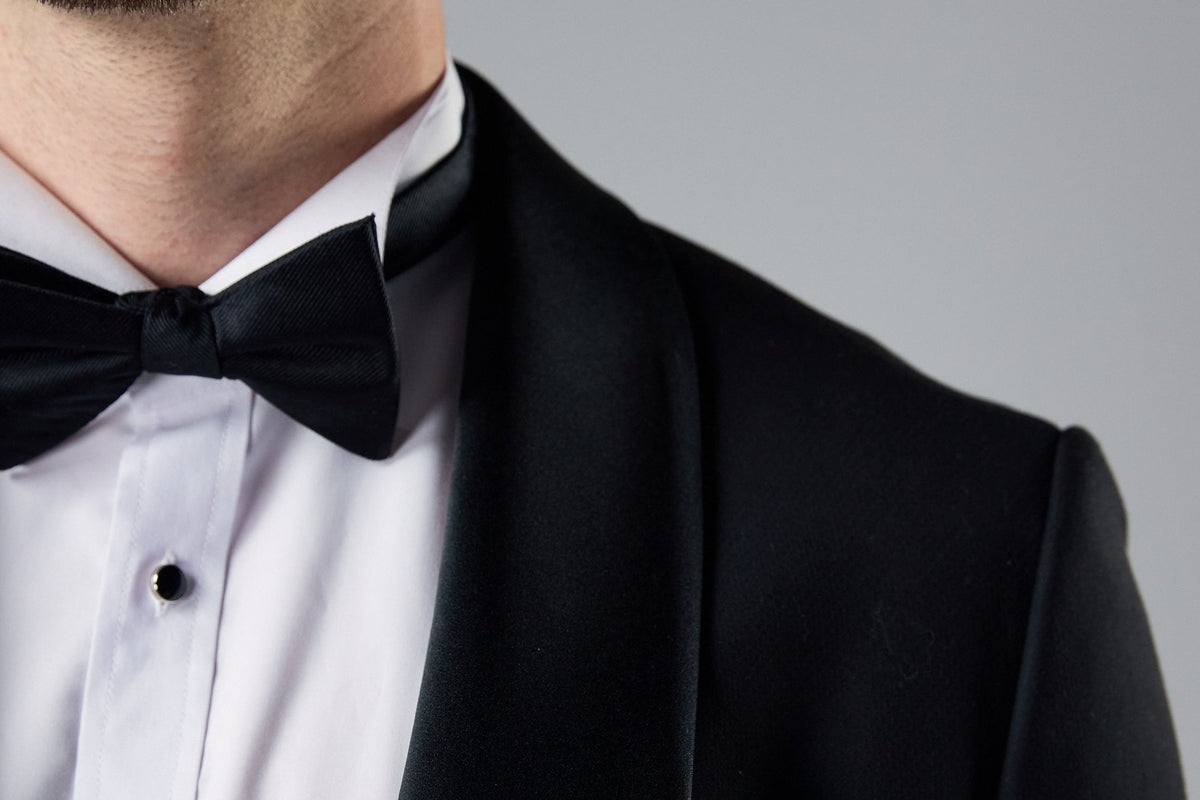
Velvet. Evening only. A dense pile with real depth of colour under artificial light, and entirely wrong in daylight or an office. Its place is black tie and formal wear, most often as a dinner jacket rather than a full suit.
Blends. Linen with wool, or linen with wool and silk, are the ones worth knowing. A blend buys one fibre's strength while borrowing another's: linen and wool breathes like linen and creases like wool, which is a better summer suit than either alone. Synthetics are different. A little adds crease resistance cheaply, and a lot stops the cloth breathing.
What the Price Gap Between Mills Actually Buys
Four things, in order of how much difference they make:
- Fibre quality and consistency, meaning not just how fine the wool is but how little it varies across the batch.
- Finishing, which is everything done to the cloth after weaving and is what gives it handle and colour depth.
- Colour and pattern range, which is how much choice you get.
- Batch-to-batch consistency, which matters if you ever need a second garment to match the first.
The mills we stock are Holland & Sherry, Loro Piana, Zegna, Cerruti, Vitale Barberis Canonico and Dino Filarte, and you can handle all six books in one sitting: our fabric range covers who they are. If you have heard of one it is probably Loro Piana suit fabric, and the reputation is earned, though it is not the only book in the room worth opening.
Those books don't sit still, either. Scott explains:
“We source our fabrics every 6 months from around the world, from countries such as Italy, England, France, and even Australia.”
Buying twice a year is how a range stays current rather than a quality claim in itself. It means the books on the table are the mills' present collections rather than whatever was ordered three years ago.
Where the Money Stops Mattering
Past a certain point, and it arrives earlier than most men expect, the difference between two good cloths at the same weight and weave is pattern and colour rather than performance. Neither wears better, and neither breathes better. If you have already decided a 240gsm mid-grey worsted is what you want, the cheaper of two good books will not let you down.
Where the money is reliably worth it is the opposite case: a cloth doing something unusual, such as a genuine fresco or an interesting blend, where the mill's expertise is doing real work.
Two things sit alongside cloth and account for the rest of what you are paying for. Construction is how the jacket is built rather than what it is built from, and whether the chest is half-canvassed or full-canvassed changes how it holds its shape over years. Trim is the smaller one: horn or shell buttons and a Bemberg lining rather than plain polyester. Neither is a cloth decision.
Choosing Cloth with Lupo Bianco
Get the weight right before you look at anything else, because it is the decision that determines whether you actually wear the suit. And read the Super number for what it is: a fineness grade rather than an overall verdict on the cloth, because a finer cloth in weekly rotation will wear out sooner.
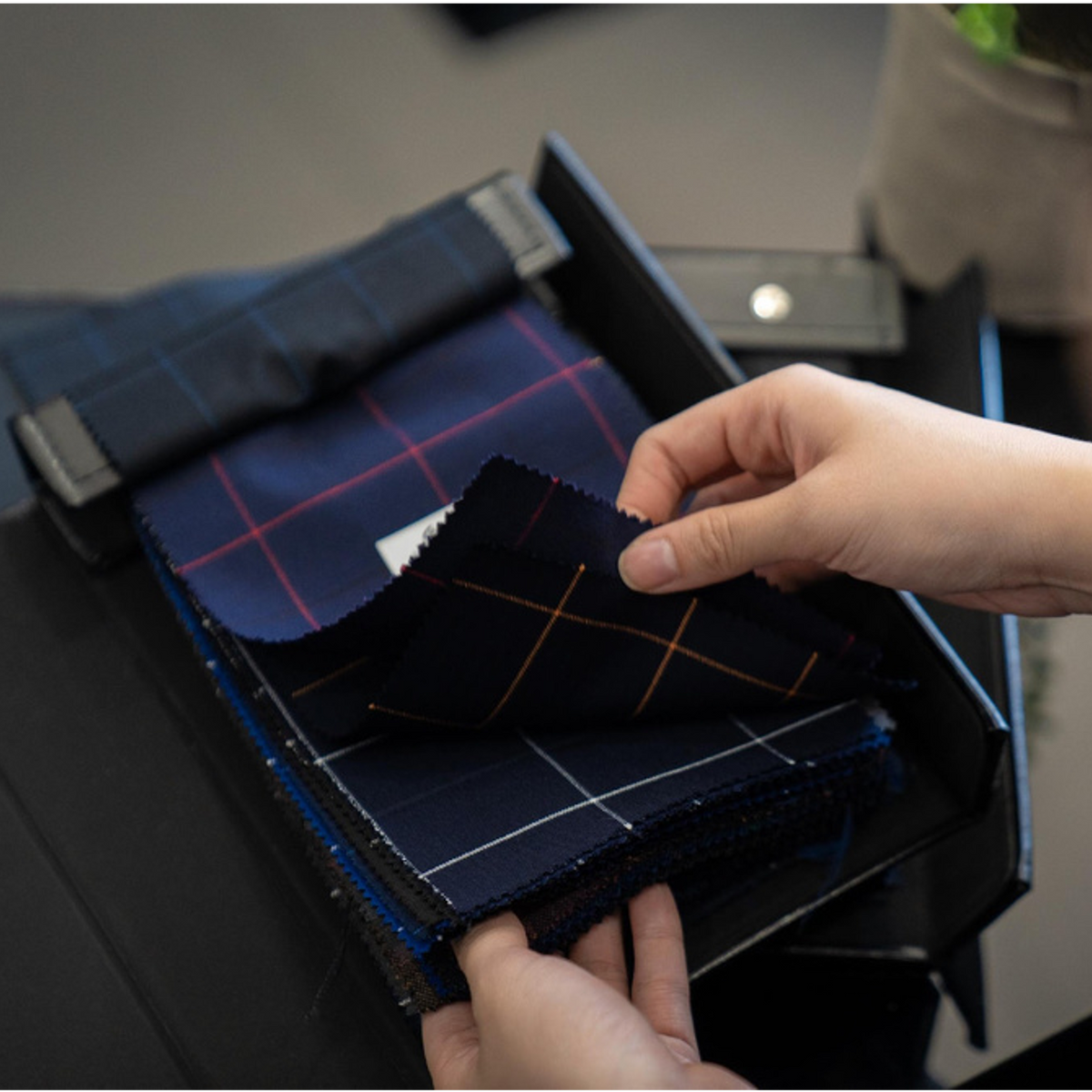
Beyond that, knowing how to choose suit fabric mostly means handling it. At our Strathfield studio, a consultation starts with the books open and the weights side by side, because the difference between 200gsm and 280gsm is obvious in the hand and invisible on a screen. We work through what you will wear it for, how often and in what weather, then narrow six mills to two or three cloths.
Have a look at our fabric range, or book a consultation and we will put them in front of you.