Key takeaways
-
01
Black tie means a dinner jacket, not a dark suit. The lapel is faced in satin or grosgrain and the buttons are covered in the same cloth, and those two details are what a black suit can’t fake.
-
02
It’s an evening dress code. Black tie before six o’clock is a contradiction, which is why the rules assume artificial light.
-
03
Midnight blue reads darker than black under evening light. It’s the traditional choice and it photographs better than black does.
-
04
Tuxedo trousers have no belt loops. A cummerbund or a waistcoat covers the waist, and you wear one or the other, never both.
-
05
Black tie optional permits a dark suit. Creative black tie doesn’t, because it changes the colour and texture of the dinner jacket rather than replacing it.
The black tie dress code for men comes down to one garment: a dinner jacket. If the dressiest thing you own is a navy or charcoal suit, it won't pass, however well it's cut. That's the short answer, and it's the one most men are after when a black tie invitation turns up.
The longer answer is where it gets useful. A few parts of black tie are fixed and plenty have loosened up, and knowing which is which stops you both overthinking it and getting caught out.
Below is what black tie is for men, piece by piece, what black tie optional and creative black tie actually let you do, and the mistakes that show up in photos. We make these garments rather than sell them off a rack, so the detail here is the detail we deal with in fittings. Richard Song, our senior tailor, walks through it on the garment in the video below.
What Black Tie Actually Means
Black tie means a dinner jacket, matching trousers, a white formal shirt, a black bow tie and formal shoes. It's an evening dress code, which is why it applies after six o'clock and why daytime black tie is a contradiction.
The rules make more sense with one line of history. Black tie began as the less formal alternative to white tie, so every element is a step down from tails: a short jacket instead of a tailcoat, a black waistcoat or cummerbund instead of a white piqué waistcoat, and a black bow tie instead of a white one.
It doesn't mean wearing a black tie, and it doesn't mean any dark suit.
Some of the code is fixed and some of it has moved. The dinner jacket, the bow tie, the formal shoes and the evening hour haven't changed. What has moved in the last twenty years is everything around them: a turndown collar is now standard, midnight blue and velvet are accepted, and a patent loafer or a pre-tied bow tie passes without comment at most events.
Black Tie Attire for Men, Piece by Piece
Black tie is a uniform rather than an outfit. Each of the five pieces below has a business equivalent that looks close but isn't interchangeable, and the differences are easy to miss in a shop and obvious in a photo.
The Dinner Jacket
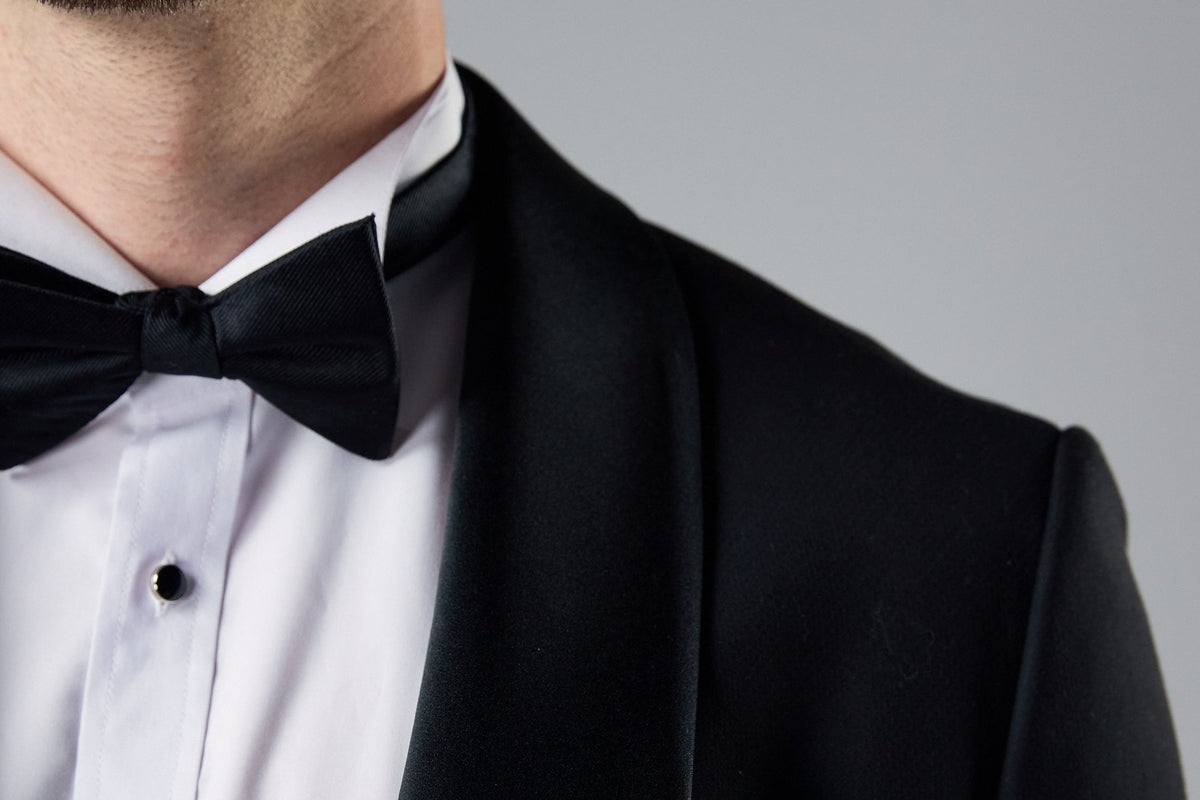
A dinner jacket is cut like a suit jacket and finished differently in three places. The lapels are faced in satin or grosgrain, a fine ribbed silk, the buttons are covered in the same facing, and the jacket fastens with a single button. Of the three, Richard singles out the lapel:
“What makes the difference between a tuxedo and a suit? It’s going to be the satin lapel.”
The lapel comes in two correct shapes. A shawl lapel is rounded, traditional and softer, and a peak lapel is angular and more formal. Avoid a notch lapel: it's the business-suit lapel, and it's the one detail that makes a dinner jacket read as a suit in disguise. Both correct shapes are standard on tailored tuxedo jackets, and there's more on how a tuxedo differs from a suit in our separate guide.
Midnight blue is worth considering before black. Under artificial light, black cloth can take on a greenish or greyish cast, while midnight blue holds a deep, near-black tone. It reads darker than black at night and photographs better under a flash, which makes it the traditional choice rather than an eccentric one.
The Trousers
Tuxedo trousers are cut from the jacket cloth and carry one distinguishing feature: a braid or satin stripe down the outside of each leg, matching the lapel facing. They don't have turn-ups.
They don't have belt loops either, and that's by design. The waist is held by side adjusters or braces, or on a custom tuxedo trouser by the fit alone, and the waistband itself is covered by a cummerbund or a low-cut waistcoat. A belt isn't a styling choice at black tie, because the trouser isn't built to take one.
The Shirt
A formal shirt for black tie is white, with either a pleated front or a marcella front, which is a textured cotton piqué. The collar is turndown or wing. A turndown collar is correct and the easier of the two to wear well, while a wing collar is traditional and unforgiving, and only works with a properly tied bow tie because the whole band of the tie sits in view.
The front fastens with studs rather than buttons, and the cuffs close with cufflinks.
The Bow Tie
Black tie means a black bow tie in silk, satin or grosgrain, ideally matching the lapel facing. A long tie isn't black tie in any version of the code.
Self-tied is correct, and the slight unevenness of a hand-tied knot is the point, because it shows the tie was tied rather than clipped on. A pre-tied bow tie is fine, and nobody at the table is going to inspect it.
The Shoes
The traditional options are patent leather oxfords, highly polished plain black leather, or opera pumps if you're a traditionalist. All of them are black and plain, with no broguing or visible stitching.
Our own styling reaches for a patent leather loafer, which is the modern reading of the code and sits comfortably inside black tie today. Richard's version of the full look shows where it fits:
“I like to pair it up with a nice, dressy watch, cufflinks, and a clean bow tie, paired with patent leather loafers with a cummerbund or a vest.”
The oxford is still the traditional choice, and it's never wrong, and both shapes sit in our shoe range. Whichever you choose, it's black and it shines.
Black Tie Optional and Creative Black Tie
These are the two phrases that turn up on invitations when the host wants the look without requiring the spend. They mean different things.
What Black Tie Optional Actually Permits
Black tie optional means a dinner jacket is still the first choice and it'll never be wrong. The permitted alternative is a dark suit in navy or charcoal, worn with a white shirt, a conservative tie and black shoes.
In practice, you'll be standing beside men in dinner jackets, so the suit has to hold its own. Wear the darkest and best-fitting one you've got and keep everything else plain, because a dark suit done carefully reads as a deliberate choice, while a dark suit done casually reads as a missed dress code.
What Creative Black Tie Means
Creative black tie keeps the structure of black tie and loosens the detail. The dinner jacket, the formal trousers and the formal shoes all stay, and the licence is in colour, texture and accessories: a velvet dinner jacket in bottle green or burgundy, a patterned or coloured bow tie, or an unusual lapel facing.
What it doesn't permit is skipping the dinner jacket or wearing a business suit. The code changes the colour and texture of the dinner jacket rather than replacing it, and that's the line that keeps creative black tie from sliding into cocktail dress.
What Will Look Wrong on the Night
Here's what not to wear to a black tie event. The first is the most common.
- A black business suit in place of a dinner jacket. The notch lapel and the matte lapel face give it away, and beside a satin-faced dinner jacket the difference is plain.
- A long tie. Black tie means a bow tie, and a long tie reads as business dress.
- A belt. Tuxedo trousers are cut without belt loops, so a belt means the trousers aren't tuxedo trousers.
- A coloured or patterned shirt. The shirt is white, and anything else belongs to creative black tie at best.
- A waistcoat and a cummerbund together. They do the same job, so wearing both doubles up.
- Brown shoes of any kind. Black tie shoes are black in every version of the code.
- A jacket that doesn't fit. It undoes everything else on this list, because the silhouette is the first thing anyone sees.
Not all of these show equally. In photos, the black suit, the long tie, a coloured shirt and a jacket that doesn't fit are obvious from across the room, and brown shoes show up in every full-length shot. A belt and a doubled-up waist mostly disappear under a buttoned jacket until the jacket comes off. If you have to prioritise, get the jacket and the tie right first.
Buying, and When a Tuxedo Is Worth Owning
It comes down to how often you'll wear it. A man who goes to one black tie event every two years has a different case from a man in a wedding party, or one with an annual industry dinner or ball.
Hiring makes sense in two situations: a one-off event with nothing else on the horizon, and a stretch when your weight or build is still changing. Outside those, owning wins on fit first. A hired tuxedo is cut for a range of men, and at black tie the silhouette carries more of the outfit than it does in a suit. The cost of hiring also comes around every time, whereas owning is paid once.
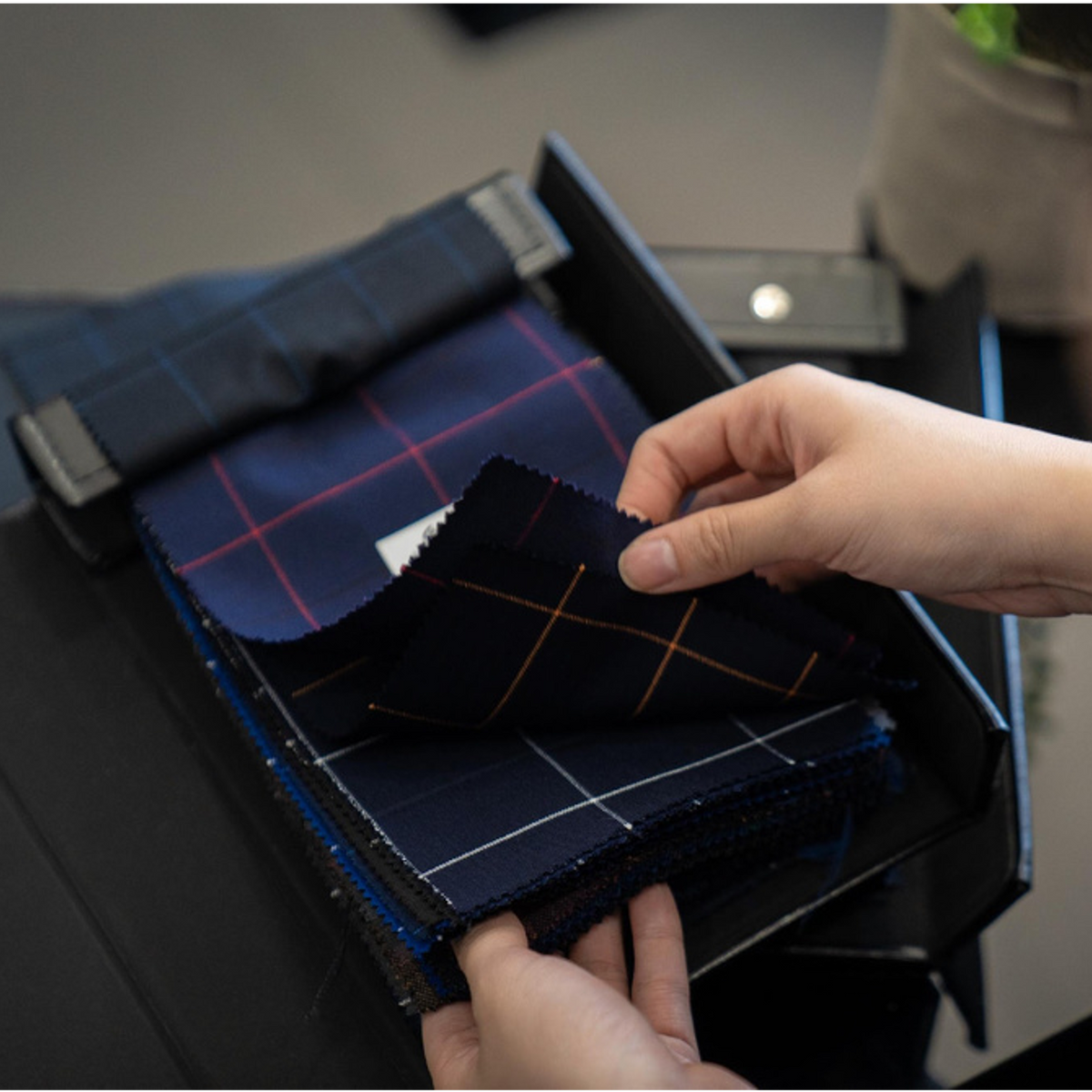
A custom tuxedo comes down to three decisions: a cloth weight that stays comfortable through a warm Australian evening, the lapel shape and facing, and timing. Allow six to eight weeks before the event for the build and the fittings.
Getting Black Tie Right with Lupo Bianco
Black tie means a dinner jacket rather than a dark suit, and the lapel facing is the detail that decides whether the garment reads correctly.
At our Strathfield studio, a tuxedo starts with those two points and the event you're dressing for, then moves through cloth, lapel and facing before anything's measured. The fittings that follow are where the line of the jacket and the hold of the trouser at the waist get settled, and that's the part a hired tuxedo can't do. Book a consultation and we'll work through it with you before the date.